


Shilajit vs Fulvic Humic Acid: What's the Difference?
Lets start by keeping it super simple: Shilajit is a whole natural resin; and fulvic and humic are two of the key compounds inside it!
If you've been scrolling wellness lately, you've probably seen both, wondering if they are the same thing - I mean they are both black and a bit strange so could they be?
So here's the plain-English version: what each one is, where it comes from, how they compare, and the one question to ask yourself before you buy either.
What is shilajit?
Shilajit is a sticky, dark brown to black resin that seeps from rock faces in high mountain ranges, most famously the Himalayas. It forms over centuries as plant matter breaks down and is pressed between layers of rock. In summer, the warmth softens it and it slowly oozes out, where it's collected by hand. Sounds a bit gross... but its actually incredible in terms of its mineral content.
It has a long history in Ayurveda, the traditional medicine system of India, where it has been used for thousands of years.
Shilajit is a complex mix rather than a single ingredient. So it typically contains:
- Fulvic acid, often a significant share, though the amount varies a lot by source
- Humic acid
- Naturally occurring minerals and trace elements
- Dibenzo-alpha-pyrones, a group of compounds often described as part of what makes shilajit distinctive
You'll usually find it sold as a raw resin you dissolve in warm water, as a powder, or in capsules.
What is fulvic humic acid?
Fulvic and humic acids are specific compounds, not whole substances. Both belong to a family called humic substances, which form as plant matter slowly breaks down in the earth over thousands of years, and they're usually found together. Fulvic acid is the smaller, lighter fraction that dissolves in water at any pH; humic acid is larger and darker - it gives the liquid that incredible colour.
In rich, healthy soils, fulvic and humic acids naturally bind to minerals and trace elements. That's why farmers and gardeners have valued them for decades: they help plants take up nutrients from the soil. And thats why its known as natures transporter!
Fulvic and humic acids can be extracted from several sources:
- Ancient plant deposits in the earth
- Peat and soil
- Shilajit itself
As a supplement, they're most often sold together as a fulvic humic liquid concentrate, which you add to water.
Shilajit vs fulvic humic acid at a glance
The simplest way to think about it: shilajit is like a whole food, and fulvic and humic acids are two of its key active parts.
|
|
Shilajit |
Fulvic humic acid |
|---|---|---|
|
What it is |
A whole natural resin |
Two related compounds, usually taken together |
|
Where it comes from |
Rock faces in high mountain ranges |
Ancient plant deposits, peat, soil or shilajit |
|
What's in it |
Fulvic acid, humic acid, minerals, dibenzo-alpha-pyrones |
Fulvic and humic acids, plus the minerals bound to them |
|
Common forms |
Resin, powder, capsules |
Liquid concentrate, powder |
|
Taste |
Strong, earthy, bitter |
Mild and slightly mineral when diluted |
|
How you take it |
Dissolve a pea-sized amount in warm water |
A few drops or 1 ml in water |
|
Consistency |
Varies a lot by source and harvest |
More consistent when extracted and standardised |
|
Traditional use |
Thousands of years in Ayurveda |
Decades of use in agriculture, more recently as a supplement |
The quality question to always check!
Both shilajit and fulvic acid come from the earth, and anything drawn from the ground can carry what the ground holds, including heavy metals like lead, arsenic, cadmium and mercury.
Raw shilajit needs careful purification before it's suitable to take, and quality varies widely between brands and harvests. The same principle applies to fulvic acid: the source and the processing matter, and the only way to know what's in the bottle is to test it.
Before you buy either, ask the brand for:
- A Certificate of Analysis with a lot number and a date, not a generic spec sheet
- Heavy metal results written as numbers, not just the words "tested" or "pure"
- Testing by an independent laboratory, not only the manufacturer
- Microbiology results (bacteria, yeast and mould)
Its SO important to ensure the product is independently tested for metals - we dont want to be taking something daily that could actually be adding to an exposure problem.
Which one is right for you?
It comes down to what you're after and how you like to take things.
- Choose shilajit if you're drawn to the traditional Ayurvedic practice and want the whole resin with everything it naturally contains. Be prepared for a strong taste and more variation between batches.
- Choose fulvic humic acid if you want the fulvic and humic acids in a concentrated, consistent and easy daily form. A liquid concentrate mixes into water in seconds and is simple to build into a morning routine.
Whichever you choose, start low and be consistent. If you're pregnant, breastfeeding, taking prescription medication or managing a health condition, talk to your healthcare practitioner first.
Where Zeally Fulvic Humic Drops fit
Our Fulvic Humic Drops are a liquid concentrate of fulvic and humic acids from ancient North American plant deposits, carrying the naturally occurring trace minerals they're bound to.
We hold ourselves to the same checklist above:
- Every batch comes with a Certificate of Analysis
- The concentrate has been independently lab tested in 2026, with every heavy metal under 5% of the USP daily limits for dietary supplements and all microbiology clear
- We publish the results in full on the product page, alongside our mineral profile and a plain-English guide to reading them
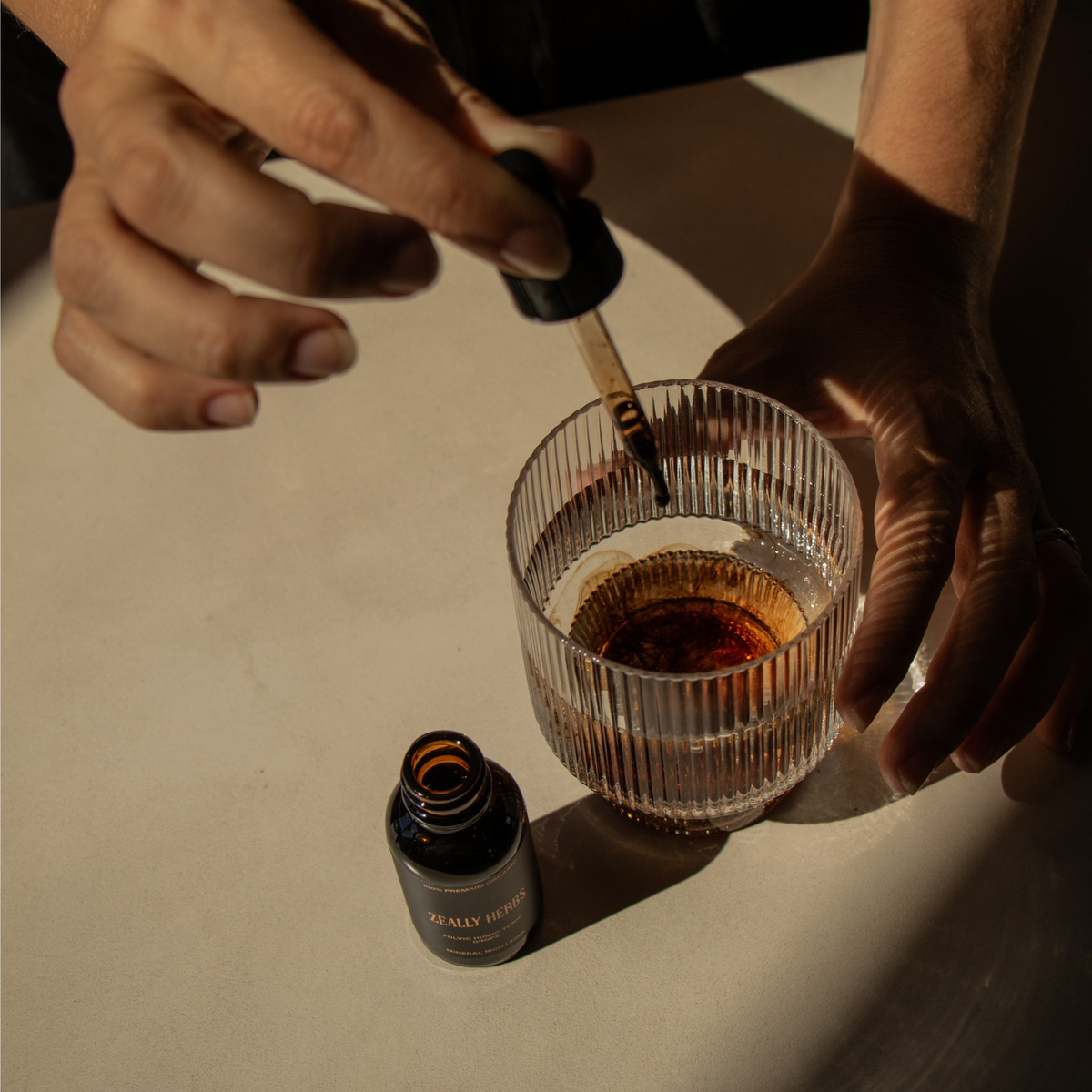
Take 1 ml in a glass of filtered water each morning, from $1.10 a day.
FAQ
Does shilajit contain fulvic acid? Yes. Fulvic acid is one of the main compounds in shilajit, alongside humic acid, minerals and other naturally occurring compounds. The amount varies by source.
Is fulvic acid the same as shilajit? No. Shilajit is a whole resin. Fulvic acid is a single compound that can come from shilajit or from other sources, such as ancient plant deposits.
What's the difference between fulvic and humic acid? They're close relatives that form together in the earth. Fulvic acid is the smaller, lighter fraction that dissolves in water at any pH; humic acid is larger and darker. Most liquid concentrates, including ours, contain both.
Can I take shilajit and fulvic acid together? They overlap a lot, so most people choose one. If you're thinking about combining them, check with your healthcare practitioner.
Why is fulvic acid black? Fulvic and humic acids are naturally dark. A deep brown to black colour is normal for a concentrate.
What should I look for when buying either? A Certificate of Analysis with a lot number and date, heavy metal results written as numbers, and independent lab testing. See our checklist above.
Read more
Zeolite vs Fulvic Humic: which binder do you need?
Zeolite and Fulvic Humic both get called binders, but they don’t work the same way. One only takes, and the other binds and gives minerals back. Here’s how each one works and which suits your cleanse.
Read more

